A high-tech enterprise specializing in the research and development of optical fiber communications and manufacturing.
Language
A high-tech enterprise specializing in the research and development of optical fiber communications and manufacturing.
The Origins of ODN
In the 20th century, last-mile access networks relied almost exclusively on copper infrastructure. The advent of Passive Optical Network (PON) technology in the early 21st century marked a paradigm shift. PON introduced a fiber-optic, point-to-multipoint architecture capable of supporting converged voice, video, and data services with superior bandwidth and latency characteristics. This architecture is built upon a passive fiber plant: Optical Line Terminals (OLTs) connect to Passive Optical Splitters, which then distribute signals to multiple Optical Network Units (ONUs) at customer premises. This critical fiber and splitter infrastructure comprises the Optical Distribution Network (ODN).
The Evolution of ODN Technology
Although the ODN is a passive layer, it constitutes the most capital-intensive and deployment-sensitive element in FTTx projects. Therefore, the ongoing evolution of ODN technology has consistently aimed at mitigating construction challenges and streamlining operational complexity.
Traditional Spliced ODN
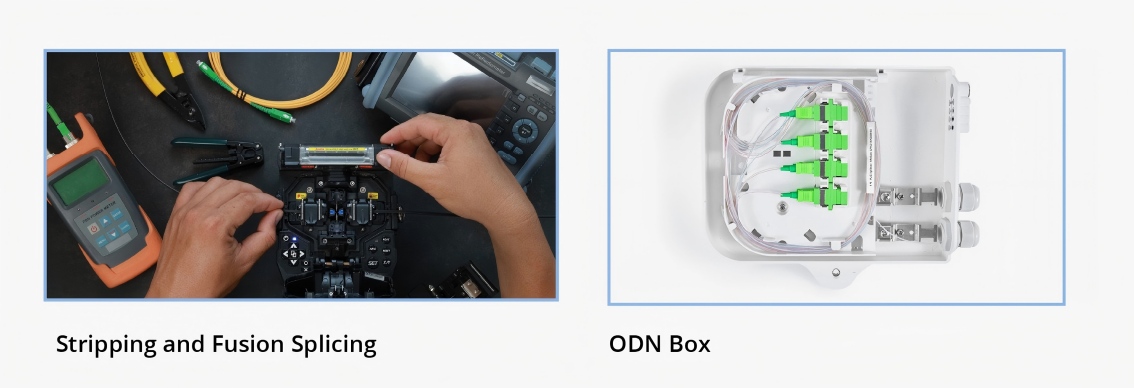
The traditional or first-generation ODN architecture, deployed for over three decades in parallel with global FTTx expansion, is still the most ubiquitous form of fiber access today. Its defining characteristic is the pervasive need for field splicing. Every segment—from feeder and distribution cables to the final drop cable—requires manual stripping and fusion splicing. Installations demand extensive fieldwork: opening multiple enclosures, meticulous cable preparation, and skilled splicing operations in both outdoor and indoor environments.
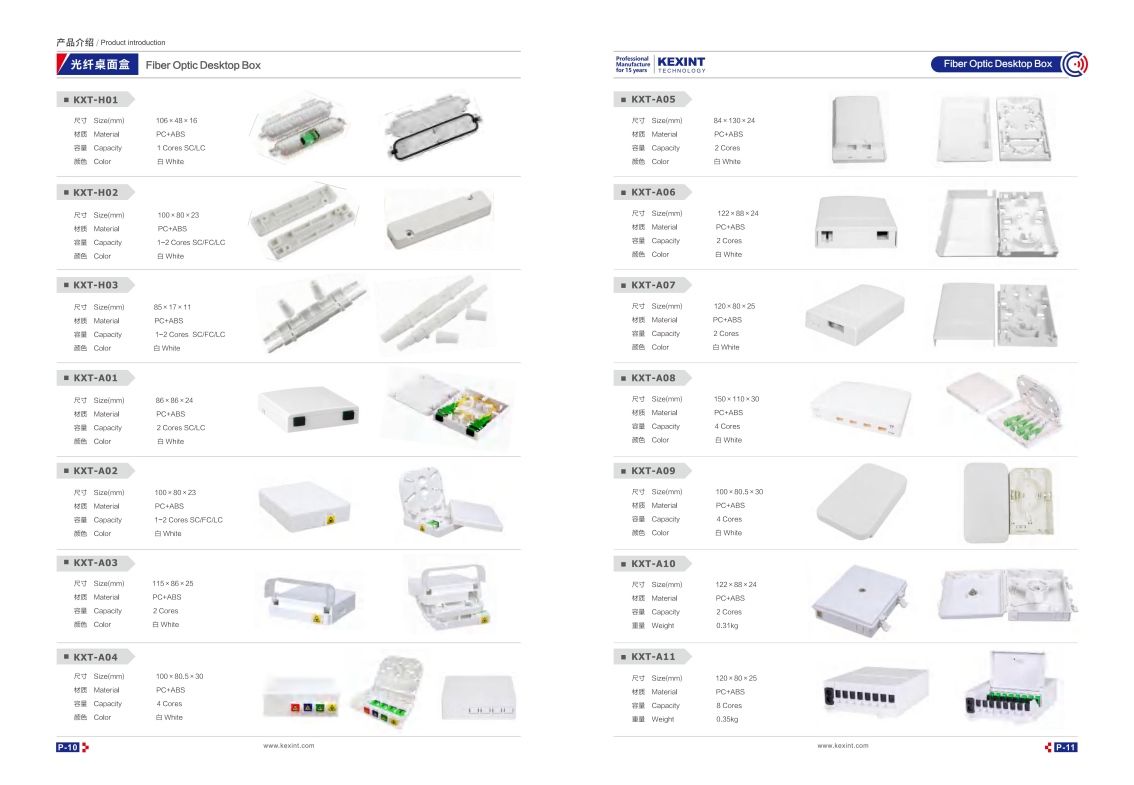
To overcome the field challenges of Traditional ODN—particularly in demanding environments—the Pre-terminated and Modular ODN (second-generation ODN) offers a streamlined alternative. It is designed to eliminate on-site fusion splicing, thereby accelerating deployment and lowering labor requirements. The key is pre-configuration: splitters come pre-installed inside closures, and all fibers are factory-terminated. This allows for plug-and-play installation in the field, where technicians simply connect pre-terminated cables to closures. Furthermore, this method supports a segmented deployment model using multiple individual cables, decouples cables from devices, and enables parallel construction workflows.
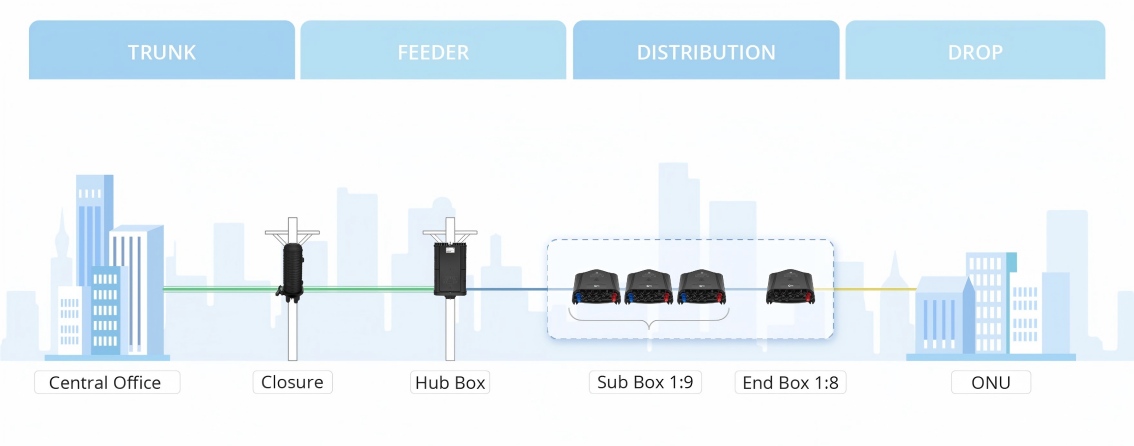
A hallmark innovation of second-generation ODN—digital labeling of fibers and ports via barcodes/QR codes—facilitated visual management through an intelligent database. However, as this visualization cannot autonomously detect or rectify faults, technical personnel must still intervene manually.
Addressing this gap, the third-generation ODN advances beyond pre-termination by embedding digital and intelligent capabilities, including AI-based image recognition and cloud management. This evolution aims to fundamentally address long-standing operational challenges by rendering ODN resources completely visible and manageable.
Leveraging optical monitoring technologies (such as reflection- or delay-based methods), intelligent management systems now automatically identify and localize faults to the exact fiber or port. Fault data is seamlessly communicated to the network operations center and field technicians’ devices. Huawei’s “Fiber Iris” system is a case in point, applying intelligent sensing to enhance fault detection and maintenance efficacy.
Selecting the optimal ODN hinges on aligning its capabilities with specific deployment needs. While ODN technology has advanced to the third-generation intelligent solutions, first- and second-generation architectures remain not only viable but optimal in certain scenarios.
Traditional Spliced ODN: For Maximum Flexibility
Where requirements are highly variable—such as when fiber lengths are uncertain or connector counts need on-site determination—first-generation conventional ODN is the practical choice. It allows technicians to tailor the network precisely to field conditions, ensuring efficient resource use and reliable, low-loss connections.
Pre-terminated ODN: For Speed and Simplicity
Second-generation pre-terminated solutions excel where rapid rollout is critical or site access is challenging. Ideal use cases include:
Remote or mountainous areas with difficult access.
Projects demanding quick coverage of multiple premises.
Temporary or urgent network expansions.
Their plug-and-play nature significantly boosts deployment efficiency, reduces labor costs, and minimizes installation errors.
Intelligent ODN: For Automated Operations
ODN 3.0, with integrated digital monitoring, automated fault detection, and remote management, is ideal for operators prioritizing operational automation and real-time visibility. Although requiring a higher initial investment, it delivers long-term operational savings and enhanced reliability for networks where streamlined management is paramount.
Conclusion
As broadband demands continue to rise, Optical Distribution Networks (ODN) are evolving accordingly, transitioning from labor-intensive methods toward automated, intelligent, and highly reliable digital systems. Choosing the correct ODN solution is key for operators to achieve faster deployment, more efficient management, and a smooth evolution path for future PON technologies.
If you are planning an ODN upgrade or seeking the best network architecture, KEXINT offers expert guidance and tailored FTTx deployment solutions. Contact us today.